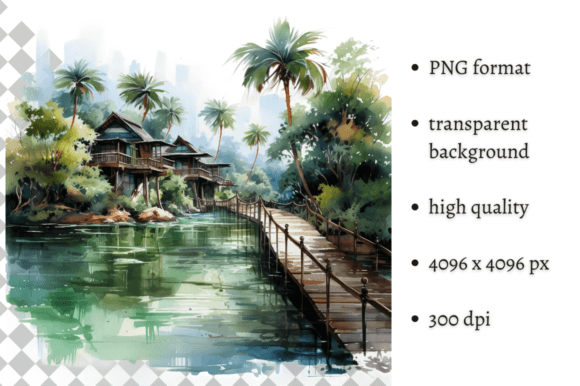
Tropical Thailand Landscape Clipart: Your Design Escape
There's a particular kind of calm that washes over you when you think of Thailand—emerald waters, misty mountains, and the gentle sway of palm fronds. Capturing that feeling in a design project used to require a photographer, a plane ticket, and a lot of luck with the weather. Now, it can be as simple as a well-crafted digital asset. The Tropical Thailand Landscape Clipart isn't just a collection of pixels; it's a curated mood. It's the visual equivalent of a deep, relaxed breath, designed to inject tranquility and natural beauty into your work without you ever having to pack a bag.
Understanding the Visual Personality
This clipart is built on a foundation of watercolor aesthetics. That means soft, blended edges, a natural color palette that feels hand-painted, and a level of detail that suggests organic texture rather than digital precision. The "personality" is serene, inviting, and slightly romantic. It avoids the harsh lines of vector graphics or the hyper-realism of a photograph. Instead, it offers an artistic interpretation of a landscape, making it versatile for projects that need a touch of warmth and human artistry. The transparent background is its superpower, allowing the scene to float effortlessly over any color or texture, integrating seamlessly into complex layouts.
Think of it as a versatile design asset. Its strength lies in its ability to act as a focal point or a subtle background element. For a travel blogger, it could be the hero image for a post about island hopping. For a wedding planner creating destination invitations, it sets the tropical tone instantly. For a small business selling handmade soaps, it can wrap around a label, suggesting a product born from natural, exotic ingredients. The visual style is cohesive enough to feel professional, yet loose enough to feel personal and creative.
Practical Applications Across Creative Fields
The real value of an asset like the Tropical Thailand Landscape Clipart is its cross-disciplinary utility. It’s not locked into one niche. Here’s how different professionals can leverage its strengths:
- For Marketers and Brand Strategists: In social media graphics, it stops the scroll. It provides an instant, positive emotional cue that can boost engagement for travel agencies, wellness brands, or eco-friendly products. Use it as a background for a quote graphic, a header for an email newsletter, or a featured image for a blog post on relaxation. It helps build a brand identity that feels aspirational and calm.
- For Designers and Publishers: In editorial design, this clipart can break up text-heavy pages in magazines or brochures. It works beautifully as a chapter opener in a travelogue or a decorative element in a cookbook featuring Thai cuisine. For packaging design, it can transform a simple box or bag into a story, hinting at the product's origins or inspiration.
- For Crafters and Hobbyists: This is where it truly shines for personal projects. Imagine using it on a scrapbook page documenting a vacation, or on handmade greeting cards. Its high resolution (4096x4096 px at 300 dpi) means it prints crisply, even at larger sizes for posters or wall art in a home office.
- For Entrepreneurs and Small Business Owners: It’s a cost-effective way to access professional-level visuals. A yoga studio can use it on their class schedule. A café with a tropical theme can incorporate it into their menu design. It elevates the perceived quality and cohesion of all your materials, from digital ads to printed flyers.
Integrating the Asset: From Selection to Final Design
Choosing to use the Tropical Thailand Landscape Clipart is the first step. Using it effectively is the next. Here’s a practical guide to making it work for you.
Evaluating Project Fit
Before you drag and drop, ask: Does this visual support the core message? If you're designing a corporate financial report, probably not. If you're creating an invitation for a beach wedding or a website for a spa, absolutely. The watercolor style pairs best with other organic elements. It might clash with ultra-modern, geometric sans serif fonts or stark, minimalist layouts. It thrives alongside natural textures, complementary earth tones, and typography with some personality.
Font Pairing and Hierarchy
Typography is critical when using such a strong visual. You need fonts that can hold their own without competing. A clean, medium-weight sans serif font for body text can provide a stable, readable foundation. For headlines, consider a script font or a handwritten font to echo the artistic, personal feel of the watercolor. Avoid overly ornate or complex display fonts that could make the overall design feel busy. The goal is visual hierarchy: let the landscape be the star, with text playing a clear supporting role.
Licensing and Commercial Use
This is a non-negotiable step for any professional project. The clipart is listed as an individual asset for paper and digital crafts. Always review the specific license from the shop where you purchase it. For most commercial use—like selling products with the design, using it in client work, or in advertising—you’ll likely need a commercial license. This ensures you're legally covered and respects the creator's work. Think of it as part of your project's budget, just like any other premium font or stock photo.
Testing in Context
Don't just place it in your document and call it done. Test it. Print a proof if it's for physical media. View it on different screens if it's digital. Does the color hold? Is the resolution sharp at the size you're using? Does it integrate with your other design assets and color scheme? Sometimes, applying a subtle color overlay or adjusting the saturation can help it blend more perfectly with your existing brand identity palette. The transparent background is your best friend here, allowing for endless experimentation.
Ultimately, the Tropical Thailand Landscape Clipart is more than a pretty picture. It's a tool for evoking a specific, powerful emotion—tranquility, escape, natural beauty. Used thoughtfully, it can elevate a project from simple to memorable, giving your audience a moment of visual respite and connecting them to a feeling we all seek. It’s a bridge between a creative idea and a tangible, evocative result.